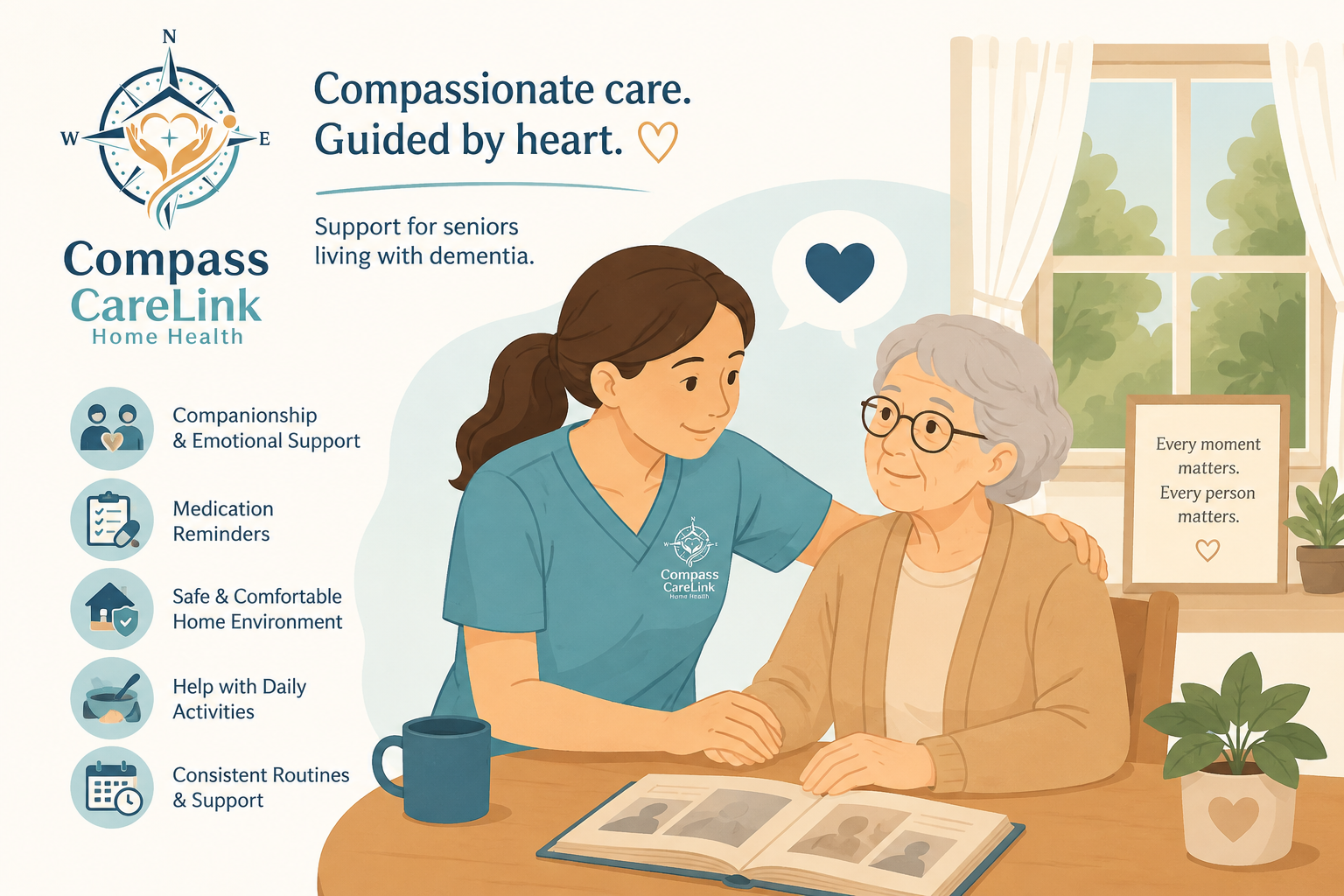
Dementia can affect memory, communication, behavior, mobility, and the ability to manage everyday activities. As the condition progresses, seniors may need additional support to remain safe and comfortable in their homes.
For families, providing dementia care can also be challenging. Home health care can offer valuable support while allowing seniors to remain in a familiar environment surrounded by the people and routines they know.
Understanding Dementia
Dementia is a general term for problems with memory, thinking, communication, and other cognitive abilities that interfere with daily life. Alzheimer’s disease is the most common cause of dementia, but other conditions can also lead to dementia.
Symptoms can vary from person to person and may include:
- Memory loss that affects daily activities
- Difficulty finding words or communicating
- Confusion about time or location
- Difficulty completing familiar tasks
- Changes in mood or behavior
- Problems with judgment and decision-making
- Difficulty managing personal care
- Changes in mobility or coordination
If a senior experiences new or worsening cognitive symptoms, families should consult a healthcare professional for appropriate evaluation and guidance.
How Home Health Care Can Help
Home-based care can provide personalized support based on a senior’s needs and care plan. Depending on the services prescribed or arranged, support may include assistance with daily activities, personal care, mobility, medication routines, and other aspects of living at home.
1. Assistance With Daily Activities
Dementia can make familiar activities more difficult. Seniors may need help with bathing, dressing, grooming, eating, and other daily routines.
Professional caregivers can provide respectful assistance while encouraging seniors to participate in activities they can safely manage themselves.
2. Promoting Safety at Home
Changes in memory and judgment can increase safety concerns. Seniors with dementia may forget to turn off appliances, become confused about where they are, or have difficulty recognizing potential hazards.
A home care professional can help families identify concerns and support safer daily routines.
3. Supporting Medication Routines
Managing medications can become challenging when memory and organization are affected.
Care professionals can provide medication-related assistance within their scope of practice and according to the senior’s established care plan. Families should always follow the instructions of the senior’s healthcare provider.
4. Encouraging Consistent Routines
Familiar routines can help create a greater sense of stability for seniors living with dementia.
Caregivers can help maintain regular schedules for meals, personal care, activities, rest, and other daily routines. Consistency may also make it easier for families and caregivers to notice changes in a senior’s condition.
5. Providing Companionship
Dementia can sometimes lead to loneliness and social withdrawal. Meaningful companionship can provide emotional support and encourage seniors to remain engaged.
Simple activities such as talking, listening to music, looking through family photographs, or enjoying a familiar hobby may provide positive moments throughout the day.
Supporting Family Caregivers
Dementia care can be demanding for family members. Caregivers may need to balance their loved one’s needs with work, household responsibilities, and their own personal needs.
Additional professional support can help families share care giving responsibilities and create opportunities for rest and personal time.
Asking for assistance does not mean a family is providing less care. Instead, having additional support can help make care giving more sustainable over time.
Creating a Dementia-Friendly Home
A supportive home environment can help reduce unnecessary risks and confusion. Families may consider:
- Removing clutter and fall hazards
- Improving lighting
- Keeping frequently used items in familiar locations
- Clearly labeling important areas when appropriate
- Securing potentially dangerous household items
- Keeping emergency contact information accessible
- Maintaining a consistent daily routine
The specific needs of each senior should always be considered when making changes to the home.
The Importance of Compassionate Care
Every person living with dementia is different. Some may experience primarily memory difficulties, while others may have significant changes in communication, behavior, or physical abilities.
Care should therefore be centered on the individual’s needs, preferences, abilities, and established healthcare plan.
Patience and respectful communication are especially important. Giving a senior extra time to respond, speaking calmly, and avoiding unnecessary confrontation can help create a more supportive environment.
When Families Should Seek Additional Support
Families should speak with a healthcare professional when they notice significant changes in memory, behavior, mobility, or daily functioning.
Sudden confusion or a rapid change in mental status should receive prompt medical attention, as it can have causes other than dementia and may require urgent evaluation.
Compassionate Care at Home With CompassCareLink
Dementia can bring challenges for both seniors and their families, but compassionate support can make everyday life more manageable.
At CompassCareLink Home Health, our goal is to provide professional, dependable care that supports seniors and their families in the comfort of home. Through appropriate home health and personal care services, we strive to promote comfort, dignity, safety, and quality of life for the individuals we serve.
With the right support and a thoughtful care plan, seniors living with dementia can continue to experience meaningful moments while remaining connected to their familiar home environment.
Compassionate care starts with understanding—and every senior deserves care that respects their unique needs.