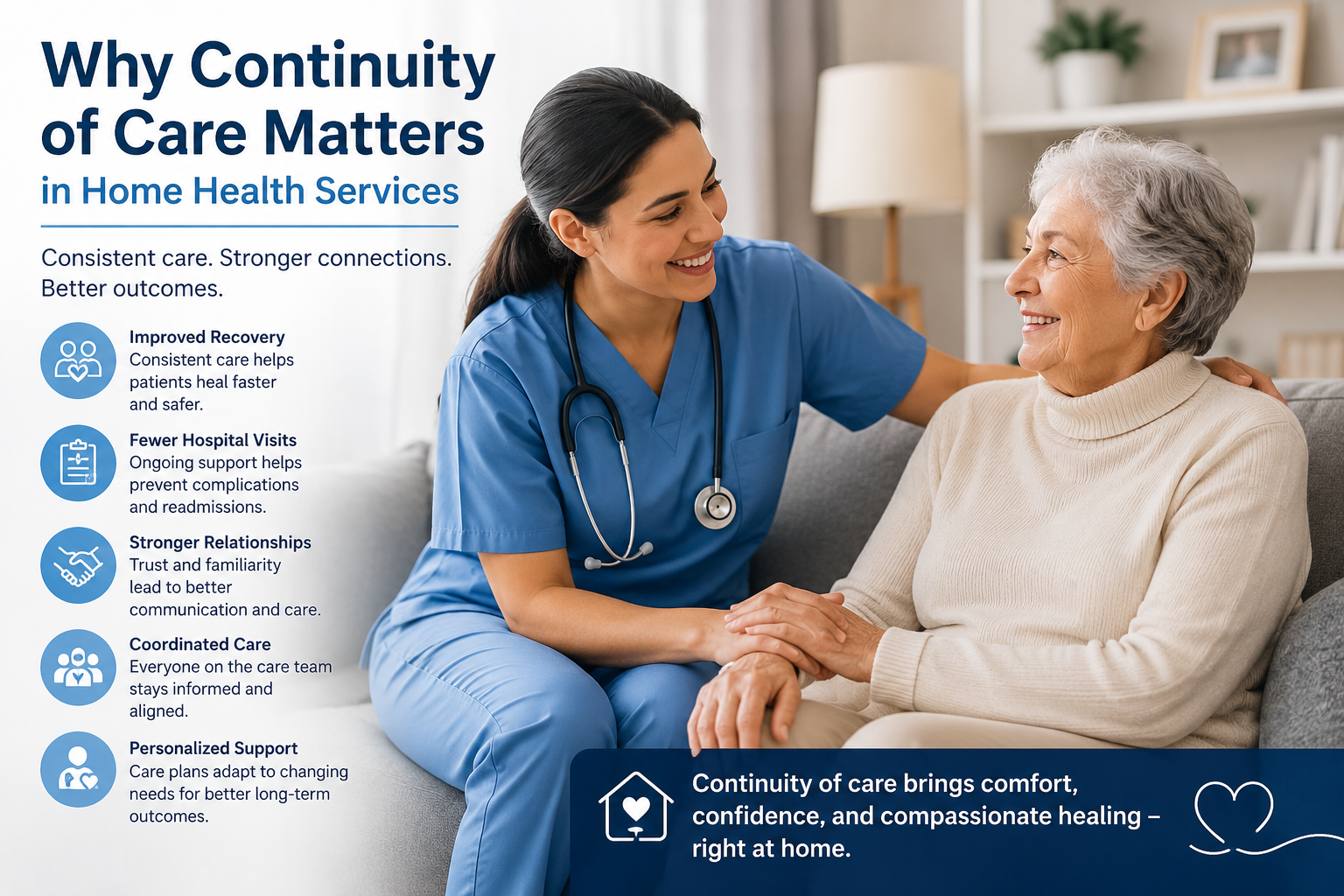
In home health services, recovery doesn’t end after a hospital discharge or a single visit from a caregiver. True healing happens over time, through consistent monitoring, support, and communication. This is where continuity of care becomes essential.
Continuity of care ensures that patients receive seamless, coordinated, and ongoing healthcare services—no matter how many providers are involved. In home health settings, it becomes even more important because care happens outside clinical environments where patients are more vulnerable and dependent on guidance.
What is Continuity of Care?
Continuity of care refers to the consistent and connected delivery of healthcare services over time. It means that patients are not left to navigate recovery alone or deal with disconnected instructions from different providers.
In home health services, this includes:
- Ongoing caregiver visits
- Consistent communication between healthcare staff
- Updated care plans based on patient progress
- Monitoring of medications, symptoms, and recovery milestones
It ensures that every caregiver involved understands the patient’s condition and follows the same care direction.
Why It Matters in Home Health Services
1. Improves Patient Recovery Outcomes
Patients recover faster and more safely when care is consistent. Repeated instructions and stable routines help reduce confusion and medical errors.
When caregivers follow a unified care plan, patients are more likely to:
- Take medications correctly
- Follow rehabilitation routines
- Avoid preventable complications
2. Reduces Hospital Readmissions
One of the biggest challenges in healthcare is avoiding unnecessary hospital readmissions. Lack of follow-up care often leads to complications that could have been prevented at home.
Continuity of care helps by:
- Identifying early warning signs of deterioration
- Ensuring proper post-treatment monitoring
- Supporting patients in managing chronic conditions
3. Builds Trust Between Patients and Caregivers
Trust is a key part of effective home healthcare. Patients feel more secure when they see familiar caregivers who understand their needs and history.
This consistency helps:
- Reduce anxiety and stress
- Strengthen caregiver-patient relationships
- Improve communication and cooperation
4. Enhances Communication Across Care Teams
In home health services, multiple professionals may be involved—nurses, caregivers, coordinators, and family members.
Continuity ensures:
- Everyone is aligned on the care plan
- Important updates are not missed
- Care decisions are based on complete patient information
5. Supports Personalized Care
No two patients are the same. Continuity of care allows providers to track progress over time and adjust care plans based on real needs instead of assumptions.
This leads to:
- Better pain management
- Improved mobility and recovery tracking
- More effective long-term care strategies
Challenges Without Continuity of Care
When continuity is missing, patients may experience:
- Confusion due to inconsistent instructions
- Missed medications or treatments
- Delayed response to health changes
- Emotional stress and lack of support
These gaps can significantly slow recovery and reduce quality of life.
How Home Health Providers Ensure Continuity
Organizations like Compass CareLink Home Health focus on building structured systems that maintain consistent care. This includes:
- Detailed care planning before services begin
- Regular caregiver updates and reporting
- Coordinated communication between staff and families
- Ongoing patient assessments and adjustments
This structured approach ensures that patients are never left without guidance throughout their recovery journey.
Final Thoughts
Continuity of care is not just a healthcare practice—it is a commitment to patient safety, dignity, and recovery. In home health services, where patients rely heavily on caregivers for daily support, consistency can make the difference between slow recovery and successful healing.
By ensuring seamless care delivery, home health providers help patients feel supported, understood, and cared for at every stage of their journey.