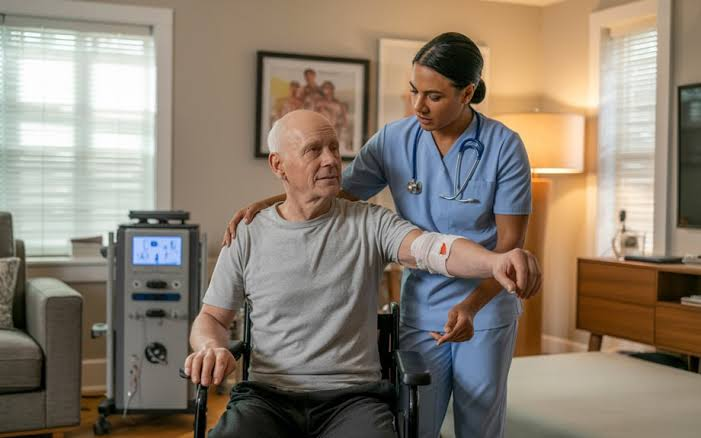
A stroke can dramatically affect a person’s movement, communication, memory, emotions, and ability to perform everyday activities. Although rehabilitation often begins in the hospital or a rehabilitation facility, recovery continues long after a patient returns home. Home health care can provide personalized support that helps stroke survivors continue their recovery, maintain safety, and work toward greater independence.
1. Supports Continued Rehabilitation
Recovery after a stroke often requires ongoing therapy. Depending on the patient’s needs, home-based care may include physical therapy, occupational therapy, and speech-language therapy.
Physical therapy can focus on strength, balance, coordination, and mobility. Occupational therapy can help patients relearn everyday activities such as dressing, bathing, eating, and using household items. Speech therapy can assist with communication and swallowing difficulties.
Receiving therapy at home also allows professionals to observe the patient’s actual living environment and recommend practical strategies for daily life.
2. Helps Patients Regain Mobility
Weakness or paralysis on one side of the body is common after a stroke. Some patients may have difficulty walking, standing, transferring from a bed to a chair, or using stairs.
Home health professionals can support prescribed exercises and mobility routines while encouraging patients to use their abilities safely. Gradually improving strength, balance, and coordination can help patients become more confident with movement.
3. Assists With Activities of Daily Living
Tasks that once seemed simple may become challenging after a stroke. Patients may need assistance with:
- Bathing and personal hygiene
- Dressing and grooming
- Eating and preparing meals
- Using the bathroom
- Getting in and out of bed
- Moving safely around the home
- Managing household routines
Appropriate assistance can help patients remain comfortable while encouraging them to regain independence whenever possible.
4. Provides Skilled Nursing Care
Some stroke survivors require ongoing nursing support after returning home. Depending on the patient’s care plan, nurses may monitor vital signs, assess changes in condition, provide wound care when needed, reinforce treatment instructions, and communicate concerns to the patient’s healthcare provider.
Regular monitoring can help identify potential problems early and support continuity of care.
5. Supports Medication Management
Many stroke survivors take medications to manage conditions such as high blood pressure, high cholesterol, or other stroke risk factors.
Keeping track of several medications can sometimes be difficult, especially for patients experiencing memory or cognitive changes. Home health professionals can help reinforce medication schedules and educate patients and caregivers about following the healthcare provider’s instructions.
6. Helps Prevent Falls and Injuries
Balance problems, muscle weakness, vision changes, and difficulty walking can increase the risk of falls after a stroke.
Home health professionals can help patients practice safer movement and identify potential hazards in the home. Recommendations may include improving lighting, removing tripping hazards, arranging frequently used items within easy reach, or using prescribed mobility equipment correctly.
7. Addresses Communication Difficulties
Some stroke survivors experience aphasia or other communication difficulties. They may have trouble finding words, understanding conversations, reading, or writing.
Speech-language professionals can work with patients on communication skills and may also teach family members strategies for communicating more effectively. Patience, simple communication techniques, and allowing extra time for responses can make everyday interactions easier.
8. Supports Swallowing and Nutrition
A stroke can sometimes affect the muscles involved in swallowing. This may make eating and drinking more difficult and can increase the risk of complications.
Healthcare professionals can follow the patient’s prescribed swallowing and nutrition plan and help caregivers understand recommended food textures, positioning, and other safety measures when applicable.
9. Encourages Independence
One of the most important goals of post-stroke care is helping patients regain as much independence as possible.
Home health care does not simply mean doing everything for the patient. Instead, caregivers and healthcare professionals can encourage patients to participate in appropriate daily activities and practice skills that support their recovery.
Small accomplishments, such as walking a little farther, dressing independently, or communicating more effectively, can contribute to greater confidence over time.
10. Provides Emotional and Social Support
Stroke recovery can be emotionally challenging. Patients may experience frustration, anxiety, sadness, changes in confidence, or feelings of isolation.
Having regular support at home can provide companionship and encouragement. Family members and caregivers can also help patients remain socially connected and participate in activities that are appropriate for their abilities.
Persistent or concerning changes in mood should be discussed with the patient’s healthcare provider.
11. Educates Family Caregivers
Family members often play an important role in stroke recovery. However, caring for someone after a stroke can be overwhelming when family members are unsure how to provide appropriate assistance.
Home health professionals can help caregivers understand the patient’s care plan, mobility needs, safety precautions, exercises, communication challenges, and other aspects of daily care.
Education can help families feel more prepared and confident while supporting their loved one’s recovery.
12. Helps Coordinate Care
Stroke recovery may involve several healthcare professionals, including physicians, nurses, therapists, and other specialists.
Home health professionals can help support communication between the patient, family, and healthcare team. Keeping everyone informed about changes in the patient’s condition can contribute to a more coordinated approach to care.
13. Supports a Safer Transition Home
Returning home after hospitalization can be an important milestone, but it can also present new challenges. Patients may need time to adjust to their home environment and learn how to safely perform daily activities again.
Home health care can provide support during this transition and help patients and families follow the recommended recovery plan.
14. Monitors Progress Over Time
Stroke recovery is different for every person. Some patients may improve quickly, while others require longer-term support.
Regular home-based care can help healthcare professionals observe progress and identify areas where additional assistance may be needed. Care plans can be adjusted by the appropriate healthcare professionals as the patient’s needs change.
15. Helps Reduce the Risk of Future Problems
Managing stroke risk factors is an important part of long-term recovery. Patients may need to follow recommendations related to blood pressure, cholesterol, physical activity, nutrition, medications, and other health conditions.
Home health professionals can reinforce the patient’s prescribed care plan and encourage healthy routines recommended by the healthcare team.
16. Allows Care in a Familiar Environment
For many patients, recovering at home can be more comfortable than spending additional time in an unfamiliar setting. Being surrounded by familiar people and belongings may help patients feel more comfortable while working through the challenges of recovery.
Care provided in the home can also make it easier for professionals to understand the patient’s everyday challenges and provide practical recommendations.
17. Promotes Long-Term Quality of Life
Stroke recovery is not only about improving physical abilities. It is also about helping patients participate in meaningful activities and maintain their quality of life.
With appropriate support, patients may gradually return to hobbies, family activities, social interactions, and other routines that are important to them.
When Should Families Consider Home Health Care?
Families may want to discuss home health care with the patient’s healthcare provider when a stroke survivor has difficulty:
- Walking or maintaining balance
- Performing personal care
- Managing medications
- Communicating
- Eating or swallowing safely
- Following a rehabilitation program
- Maintaining a safe home environment
- Managing everyday activities independently
The type and amount of care should be based on the patient’s individual condition and recommendations from their healthcare team.
Conclusion
Recovering from a stroke is a gradual process that can continue well beyond the hospital stay. Home health care can provide valuable support through skilled nursing, rehabilitation, assistance with daily activities, safety monitoring, caregiver education, and ongoing encouragement.
With an individualized care plan and support from healthcare professionals and family members, stroke survivors can continue working toward greater independence and a better quality of life in the comfort of their own home.
If a stroke survivor develops sudden new weakness, facial drooping, speech difficulties, confusion, vision problems, severe dizziness, or another possible sign of stroke, seek emergency medical care immediately.
Leave a Reply